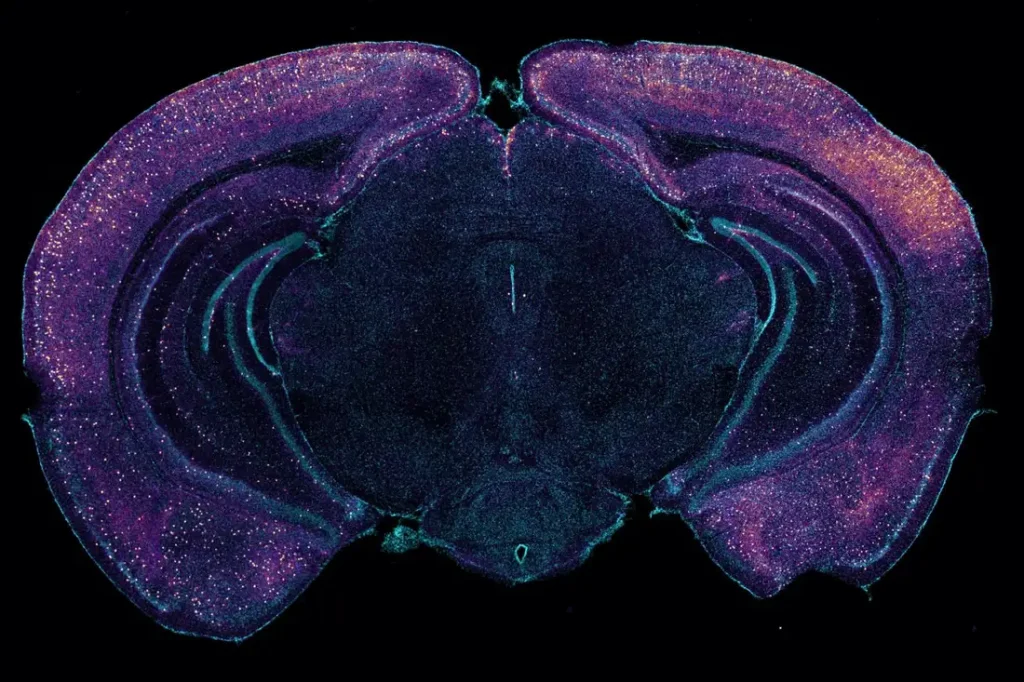
A new explanation has emerged for why an experimental treatment for Alzheimer’s disease involving sounds and flickering lights may help slow cognitive decline. The frequencies involved seem to ramp up the brain’s waste disposal networks, which boosts the clearance of beta-amyloid and other toxic proteins that contribute to memory and concentration problems.
“Once we understand the mechanism, we can probably figure out how to further optimise this whole concept and improve the efficacy,” says Li-Huei Tsai at the Massachusetts Institute of Technology.
The treatment involves exposing people to lights flickering at a frequency of 40 times a second, or 40 hertz, and a low-pitched sound, also at 40 Hz. Typically, the stimulation is given for an hour a day.